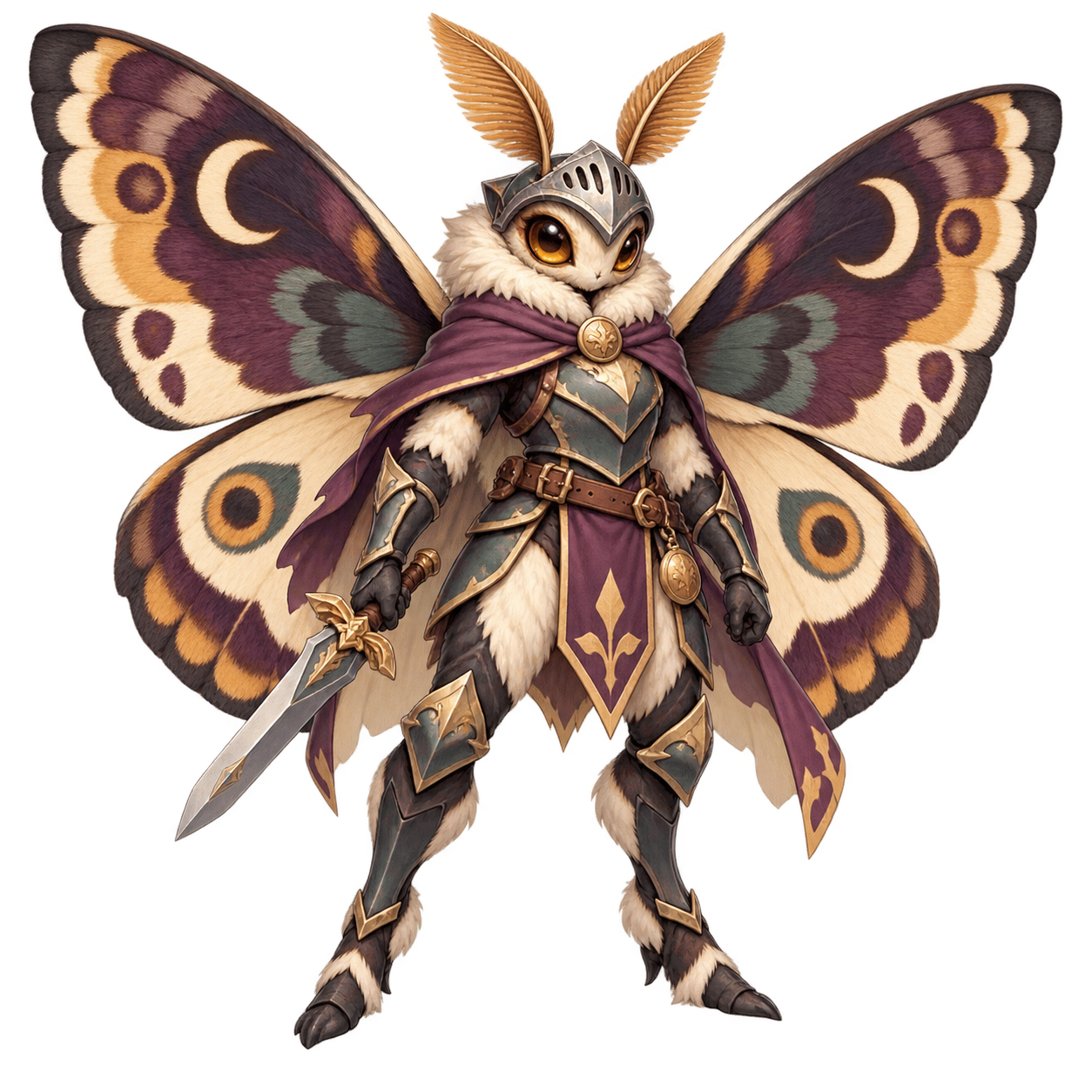
Whole image, shown smaller to this panel. Original proportions preserved.
 100 px
The finished sprite at its actual size. It has not been enlarged.
Actual download size (1:1)100 × 100 pxShown without enlargement.
- Size chosen
- 96 px
- Sprite, before border
- 96 × 96
- Empty border, each side
- 2 px
- Final PNG size
- 100 × 100
201,588 → 4,753 visible colours. We chose a 96 px sprite with a 2 px empty border. Small textures become simpler at this size.
Download this PNG ↓How this example was made Engine 0.2.0 +
Settings used for this example
96 px was chosen to retain the face and wing markings. Binary transparency removes faint edge pixels. No grid repair or colour reduction.
Measured from this run
- Trimmed subject bounds
- 1187 × 1190 px
- Subject aspect ratio
- 0.997 : 1 (width : height)
- Requested core dimensions
- 96 × 96 px (aspect-preserving)
- Final size calculation
- (96 + 2 × 2) × (96 + 2 × 2) = 100 × 100 px
At 1:1, browser zoom and display scaling can affect physical screen pixels. Preview backgrounds are not included in the PNG.
Exact recipe
{
  "recipeVersion": 1,
  "engineVersion": "0.2.0",
  "mode": "downscale",
  "background": {
    "mode": "preserve",
    "toleranceRgbPercent": 8,
    "erosionSourcePx": 0
  },
  "grid": {
    "enabled": false,
    "outlineExpansion": 0
  },
  "resize": {
    "enabled": true,
    "longestSide": 96,
    "filter": "source_default",
    "allowUpscale": false
  },
  "palette": {
    "enabled": false,
    "colours": 24,
    "protect": 4,
    "cleanPasses": 0
  },
  "finish": {
    "trim": true,
    "alpha": "binary",
    "thresholdPercent": 50,
    "gutter": 2,
    "bleedTransparentRgb": true
  }
}
SHA-256 file hashes
Source 94ac6047bf458e244bfd7fb8a5446eca1064d473612a14dedc70a7937a815411
Result 08b94d985f33894329b3ce0016f7fe7f0ec14f90673ccd311c20f4125012c6f3
Try these tools on your own artwork.Open downscale →